
Why Some Geniuses Collapse Under Pressure
Why the same nervous system that creates greatness can also sabotage it


James Harden and the Neurodivergent Performance Trap
One of the most fascinating things about elite performance is that the same nervous system that makes someone exceptional can also become the thing that limits them under extreme pressure.
I’ve been thinking about this while watching the NBA playoffs, especially when watching James Harden.
Because James Harden is not just a great player. He is one of the greatest offensive players of his generation. An MVP. A scoring champion. One of the most creative isolation scorers the league has ever seen.
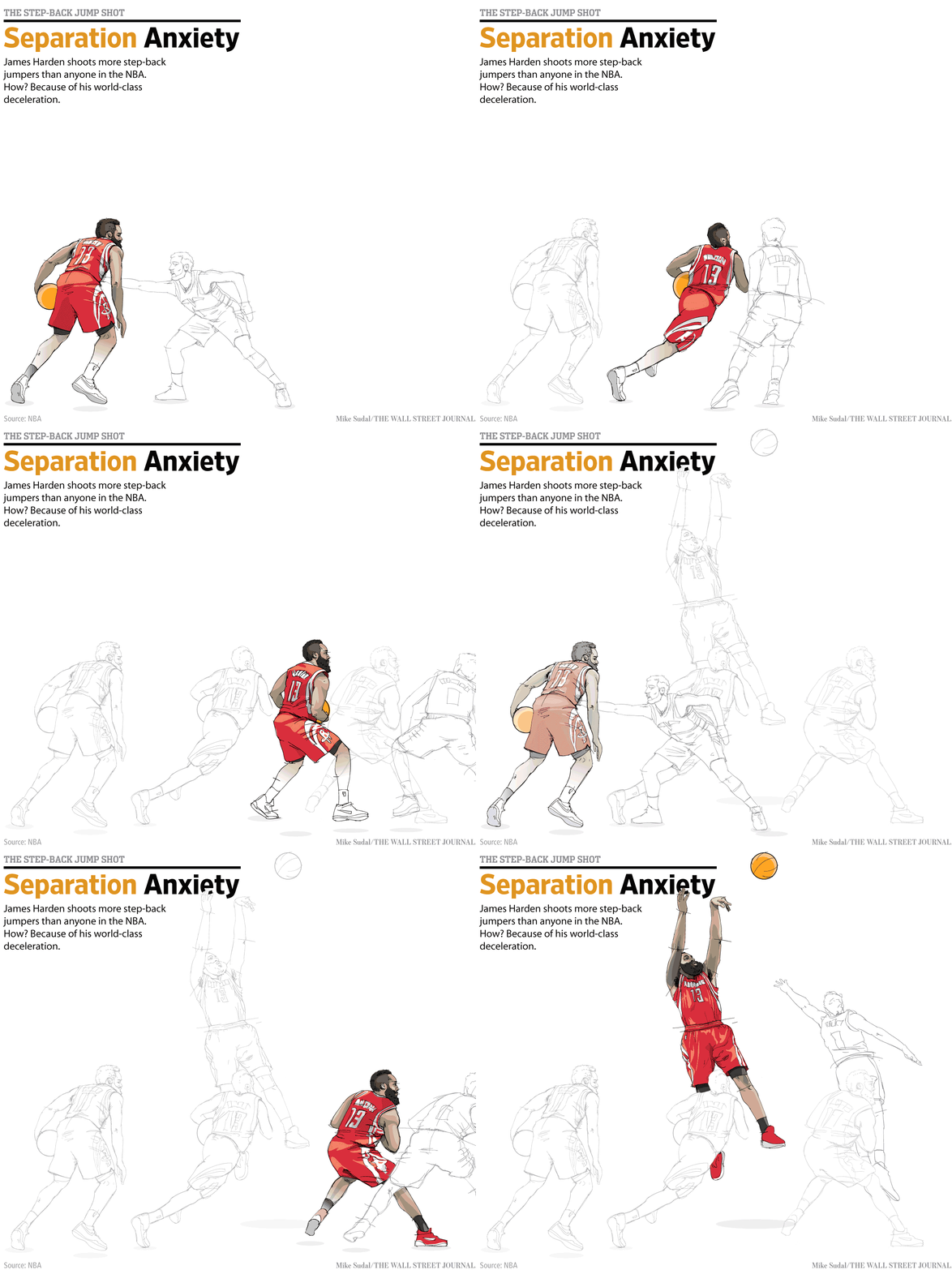
During the regular NBA seasons, Harden often looks almost impossible to guard. His game is built around rhythm, improvisation, manipulation and timing. He reads defenders psychologically as much as physically. He slows the game down, controls pace and creates space in ways that feel almost artistic.
That is not normal talent.
His career statistics reflect that:
NBA MVP (2018)
3× NBA scoring champion
Multiple seasons averaging over 30 points per game
Averaged 36.1 PPG in the 2018–19 season
One of the NBA’s all-time leaders in assists and three-pointers
Over 27,000 career points
Consistently elite regular-season efficiency and offensive creation
But despite all of that brilliance, the same pattern keeps returning in the playoffs — especially in elimination games and high-pressure moments.
Over the years, Harden has had multiple postseason games where:
his scoring dropped dramatically
his field-goal percentage collapsed
his turnovers increased
his aggression disappeared
he became unusually passive offensively
Some examples:
2012 NBA Finals with OKC against Miami
2015 Western Conference Finals vs Golden State
2017 Game 6 vs San Antonio, where he scored only 10 points with 6 turnovers
2023 Game 7 vs Boston, where he shot 3-for-11 and scored 9 points
Several elimination games where his efficiency dropped far below his regular-season level
Sports media usually explains this with words like “soft,” “mental weakness” or “choking.”
But I think that explanation is too shallow.
I think there is something deeper happening that says a lot about neurodivergence, trauma and the nervous system itself.
Flow and Hyperfocus
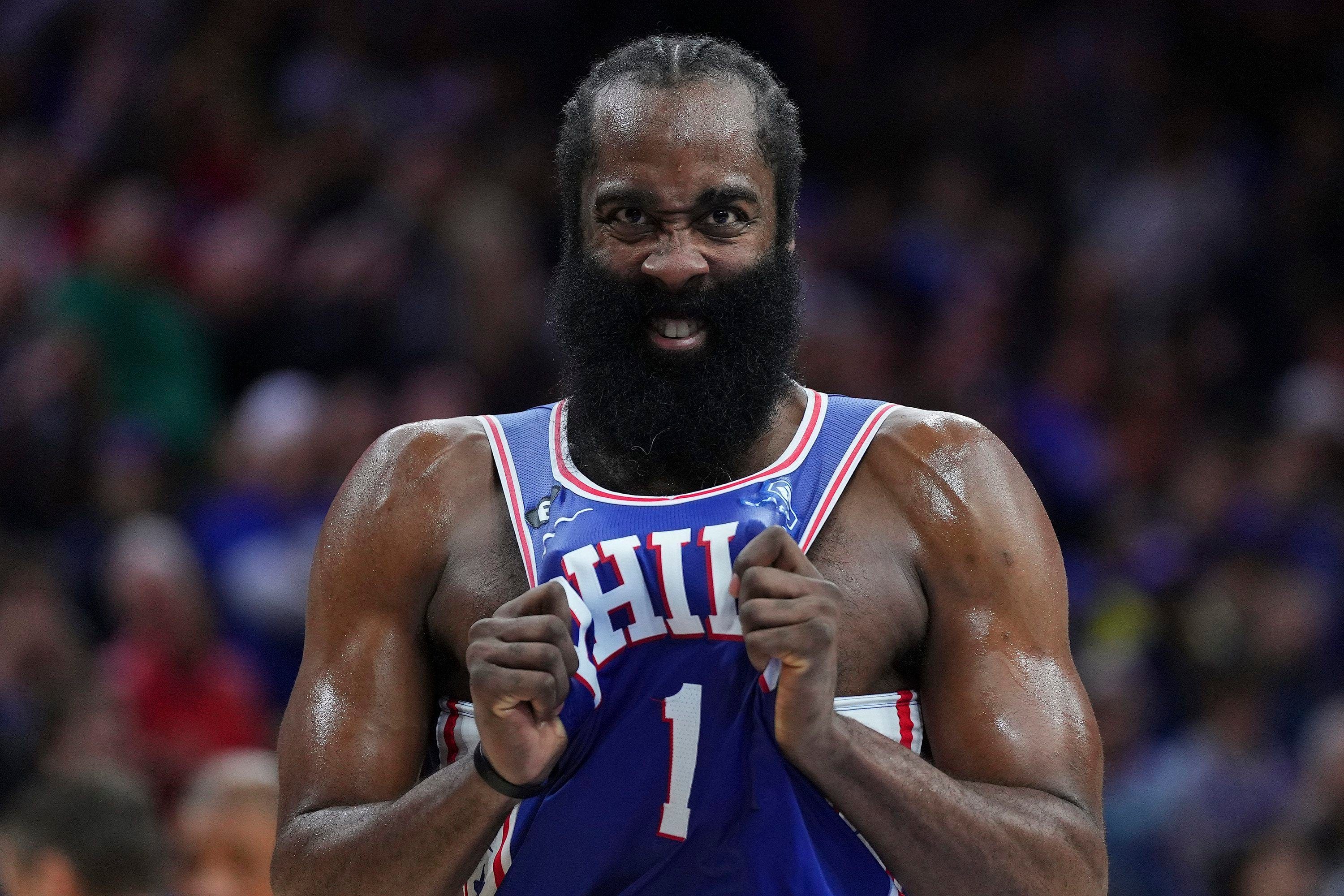
A lot of elite performers seem to possess nervous systems that operate differently from average people. Whether we label that ADHD, hypersensitivity, hypervigilance or high-functioning anxiety, many elite performers appear capable of entering states of flow faster and deeper than most people around them.
In sports, flow can look magical.
The game slows down. Decisions become instinctive. Creativity becomes automatic. Athletes stop consciously thinking and start reacting.
For players like Harden, that ability is part of what makes them brilliant. His style has never been robotic. It relies heavily on feel, timing and improvisation.
But there is another side to nervous systems like that.
The same sensitivity that allows someone to access deep flow can also make them more vulnerable to emotional overload once pressure stops feeling manageable.
And there is a huge difference between pressure and threat.
When Pressure Stops Feeling Like Sport
An NBA regular season game and an NBA elimination game are psychologically worlds apart.
During the regular season, there is room for recovery. Teams play 82 games. Mistakes are survivable. One bad night does not define an entire career.
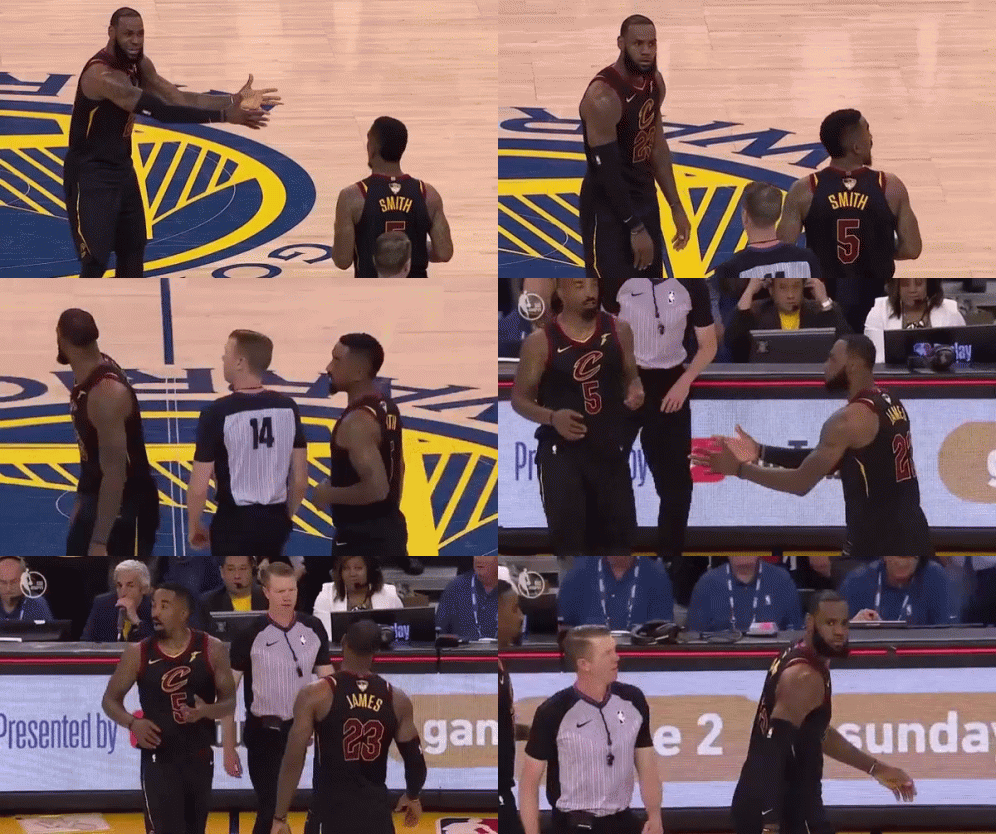
But during playoff elimination games, the emotional stakes become existential.
Millions are watching globally. Entire franchises depend on outcomes. Social media dissects every mistake instantly. Legacies are built or destroyed in real time.
For some athletes, that pressure sharpens focus.
For others, the nervous system begins interpreting the moment differently. The body stops experiencing the situation as competition and starts experiencing it as danger.
And once the brain enters survival mode, creativity usually disappears first.
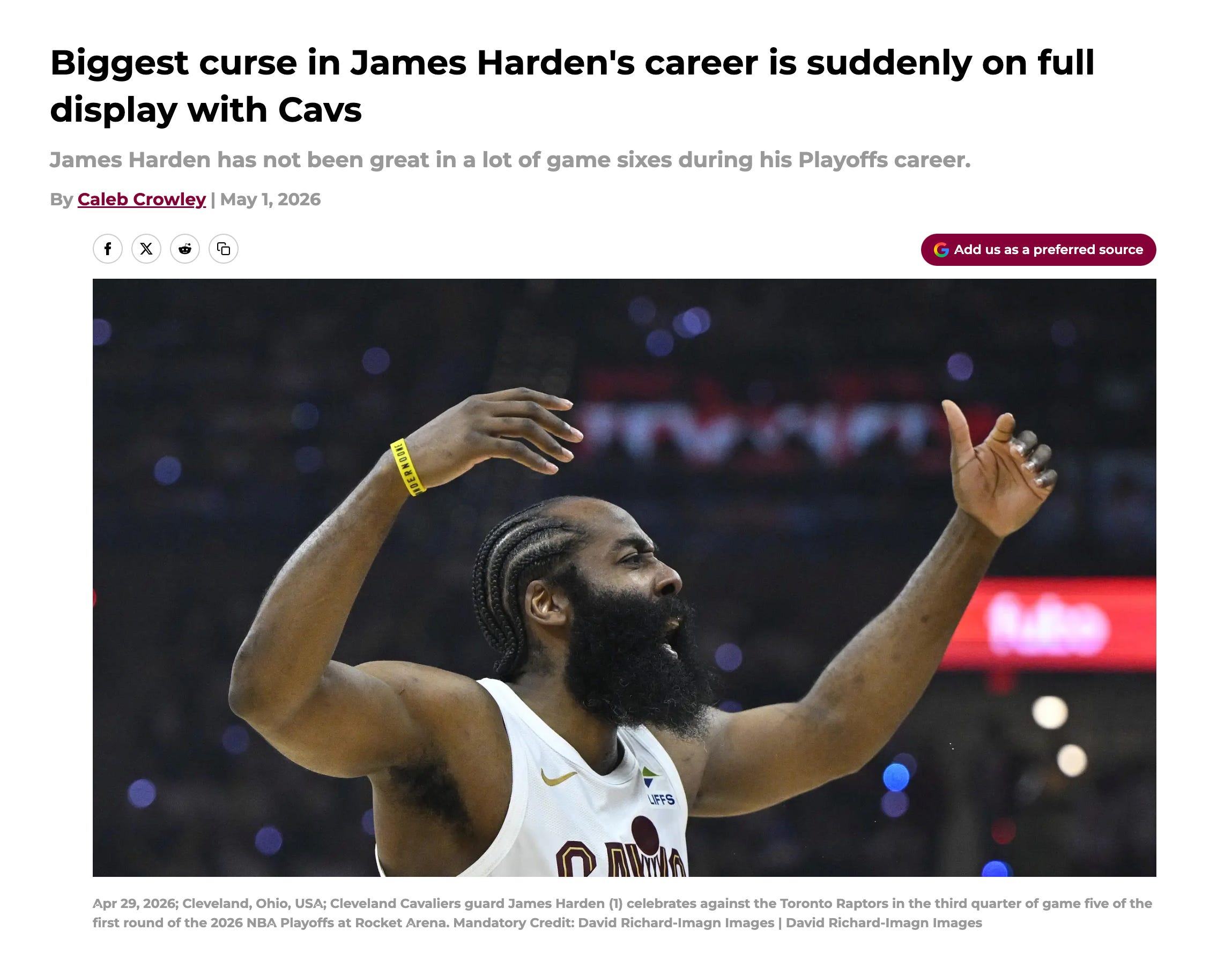
That matters because players like Harden rely heavily on looseness, instinct and improvisation. But survival mode tightens the body. It creates hesitation. It interrupts flow.
The player is still physically present, but psychologically disconnected from the state that made them elite in the first place.
Why Some Players Become Better Under Pressure
What makes this even more interesting is that other players seem to experience the exact opposite effect.
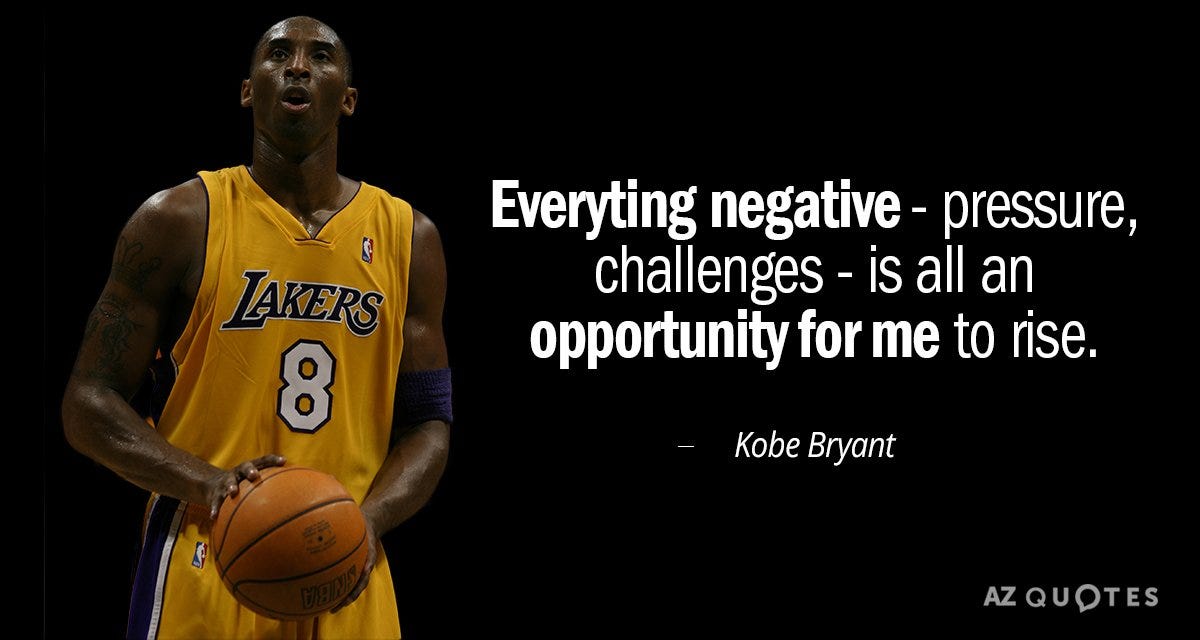
Players like Michael Jordan, Kobe Bryant and Nikola Jokić often appear calmer as pressure increases.
Michael Jordan became famous for becoming emotionally sharper in elimination moments. Kobe Bryant actively sought pressure and seemed psychologically energized by difficult situations. Nikola Jokić often looks almost unnaturally relaxed regardless of the stakes around him.
That does not necessarily mean they “wanted it more.”
It may also reflect something deeper about how their nervous systems process stress.
For some people, extreme pressure activates hyperfocus.
For others, extreme pressure activates hypervigilance.
From the outside, those can look similar. Internally, they are completely different biological experiences.
And a large part of that difference may come from how safety, stress and emotional regulation were formed early in life.
Kobe Bryant, James Harden and the Inheritance of Pressure
I also think the contrast between Kobe Bryant and James Harden says something deeper about how early environments shape the way people later respond to pressure.
Kobe Bryant grew up in a household where elite performance was already normalized. His father, Joe Bryant, was a professional basketball player who played in both the NBA and Europe. That meant Kobe did not just admire greatness from a distance — he lived close to it. He watched someone navigate pressure, competition, discipline and professional sports from inside the home itself.
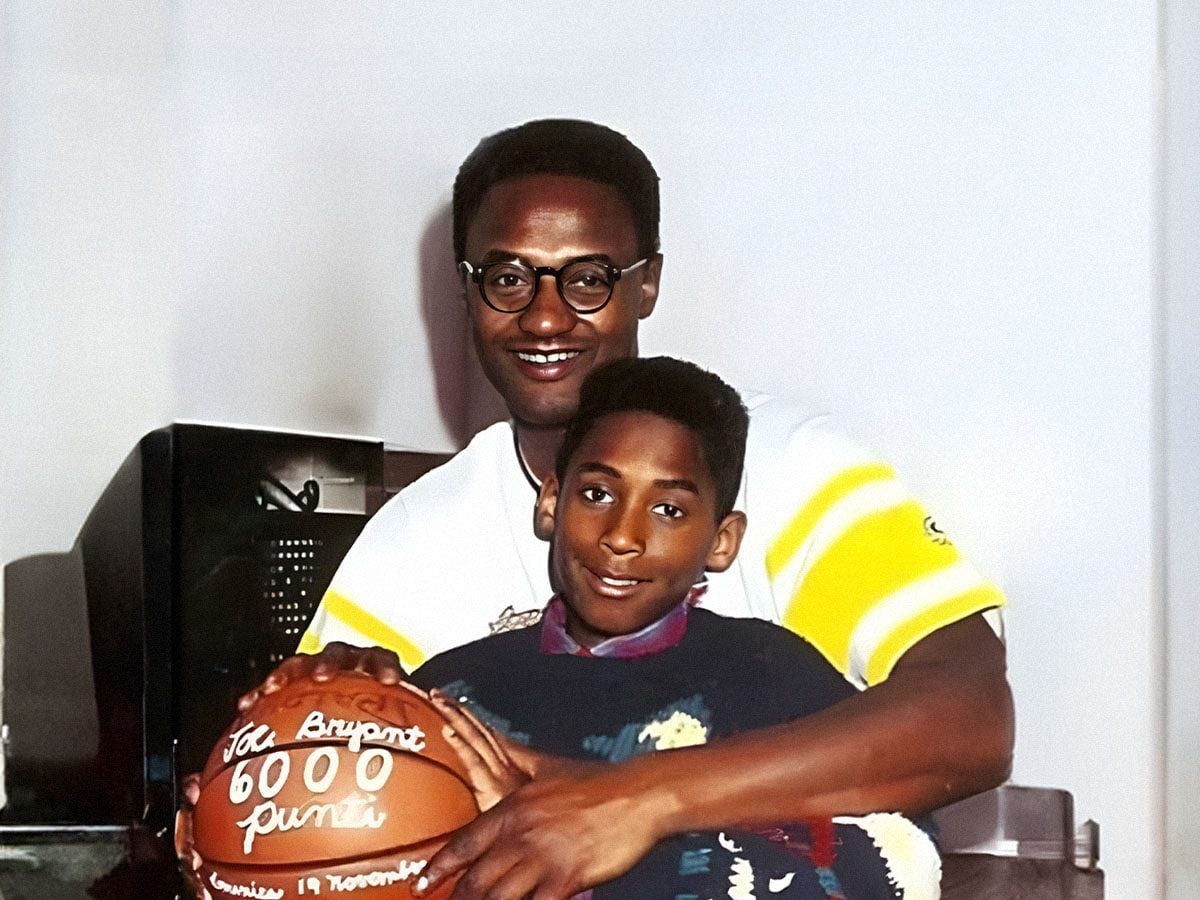
That matters psychologically.
Because when a child repeatedly experiences difficult moments within a safe and guided environment, pressure slowly becomes associated with growth rather than danger. Kobe was not only developing basketball skills; he was developing emotional familiarity with high-performance situations while still having structure, mentorship and emotional grounding around him.
At some point, there is also a symbolic transition that happens in those relationships. The moment a young athlete begins competing with or surpassing the parent figure, the confidence and identity attached to that parent’s example partially becomes internalized. The child no longer only witnesses strength — they begin embodying it themselves.
That creates what could almost be described as inherited psychological safety around performance.
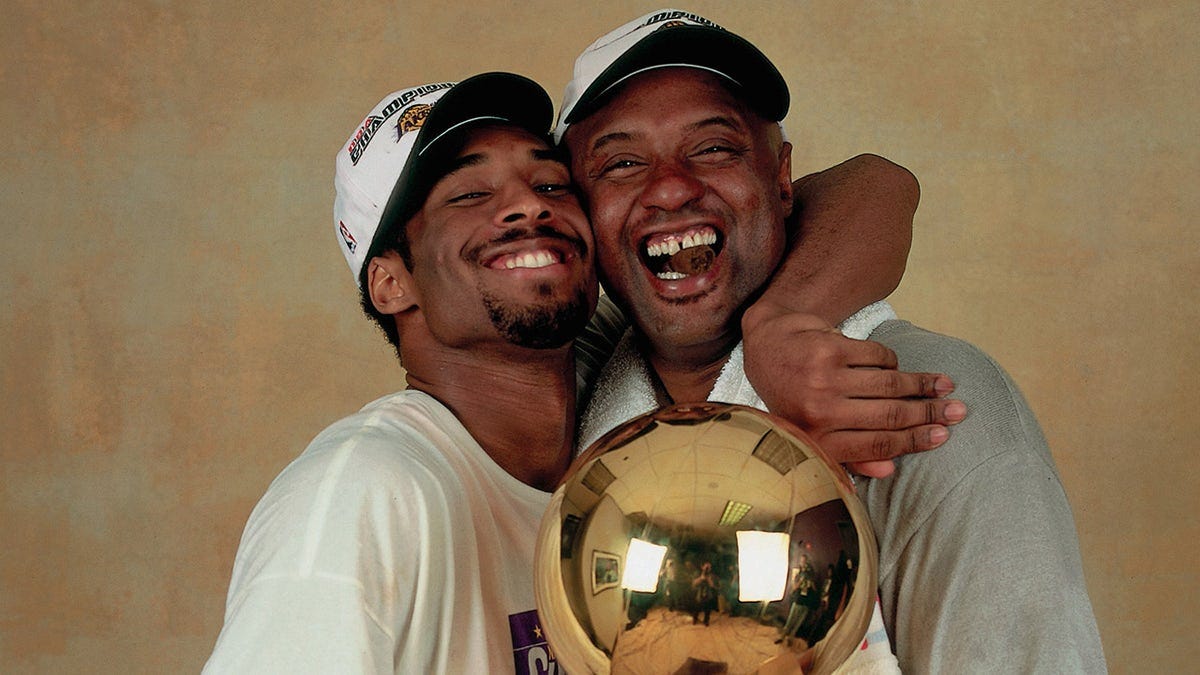
And throughout Kobe’s life, that structure kept repeating itself. Early guidance from his father later evolved into mentorship from figures like Jerry West, Phil Jackson and veteran teammates. Pressure rarely arrived in total isolation.
James Harden’s background appears to have been very different.
From what is publicly known, Harden grew up in Compton in a much more unstable environment, largely raised by his mother while his father was frequently absent and incarcerated. That creates a very different emotional relationship to pressure, identity and self-reliance.
A young athlete in that environment often has to psychologically carry themselves much earlier. They may still develop greatness, discipline and resilience, but the journey toward elite performance becomes far more isolated. There is less emotional co-regulation. Less inherited confidence. Less direct modeling of how to safely move through massive moments.

And that changes how the nervous system experiences pressure later in life.
For Kobe Bryant, stepping into a huge basketball moment may have felt like an extension of something emotionally familiar. Pressure had already been introduced in smaller, safer stages throughout his development.
For someone like Harden, those same moments may carry a different emotional weight because they had to be embodied alone much earlier.
And this extends far beyond basketball.
Sometimes the “inheritance” is not basketball itself. It can be a parent who modeled emotional stability, creative confidence, leadership, communication or perseverance in another area of life. Watching someone close to you repeatedly move through difficult situations with calmness and self-belief teaches the nervous system that pressure is survivable.
Without that proximity, many people are forced to learn those lessons alone and in real time.
And when no internal feeling of safety exists underneath pressure, overwhelming moments can slowly push someone away from the very flow state that normally makes them exceptional.

Trauma, Safety and Performance
A lot of high-performing people learned very early how to emotionally survive difficult environments. (I spot them everywhere, often earning good money with traits that once needed to be forcefully developed as a young person just to survive)
They learned how to suppress emotion, rationalize pain and continue functioning despite instability around them. Many became hyper-independent long before adulthood.
Those adaptations often become strengths later in life.
Hypervigilance becomes “focus.”
Emotional suppression becomes “discipline.”
Overperformance becomes “ambition.”
But coping mechanisms are not the same thing as emotional safety.
If someone grows up in environments where stress consistently feels unpredictable or emotionally unsafe, the nervous system may become highly effective at surviving pressure while still remaining deeply reactive to threat underneath.
How to Raise a Nervous System

I’ve come to believe that the foundation of parenting isn’t about teaching a child who to become — but about nurturing how they experience the world.
That works until the stakes become too emotionally overwhelming.
At the highest level of sports, performance is no longer only about skill or preparation. It is also about whether your nervous system can remain safe enough to stay creative under chaos.
And that may explain why some athletes become freer as pressure rises, while others slowly move into more defensive forms of operation.
Not because they suddenly lost talent.
But because their nervous system stopped experiencing the moment as safe enough for flow.
The Tragedy of Certain High Performers
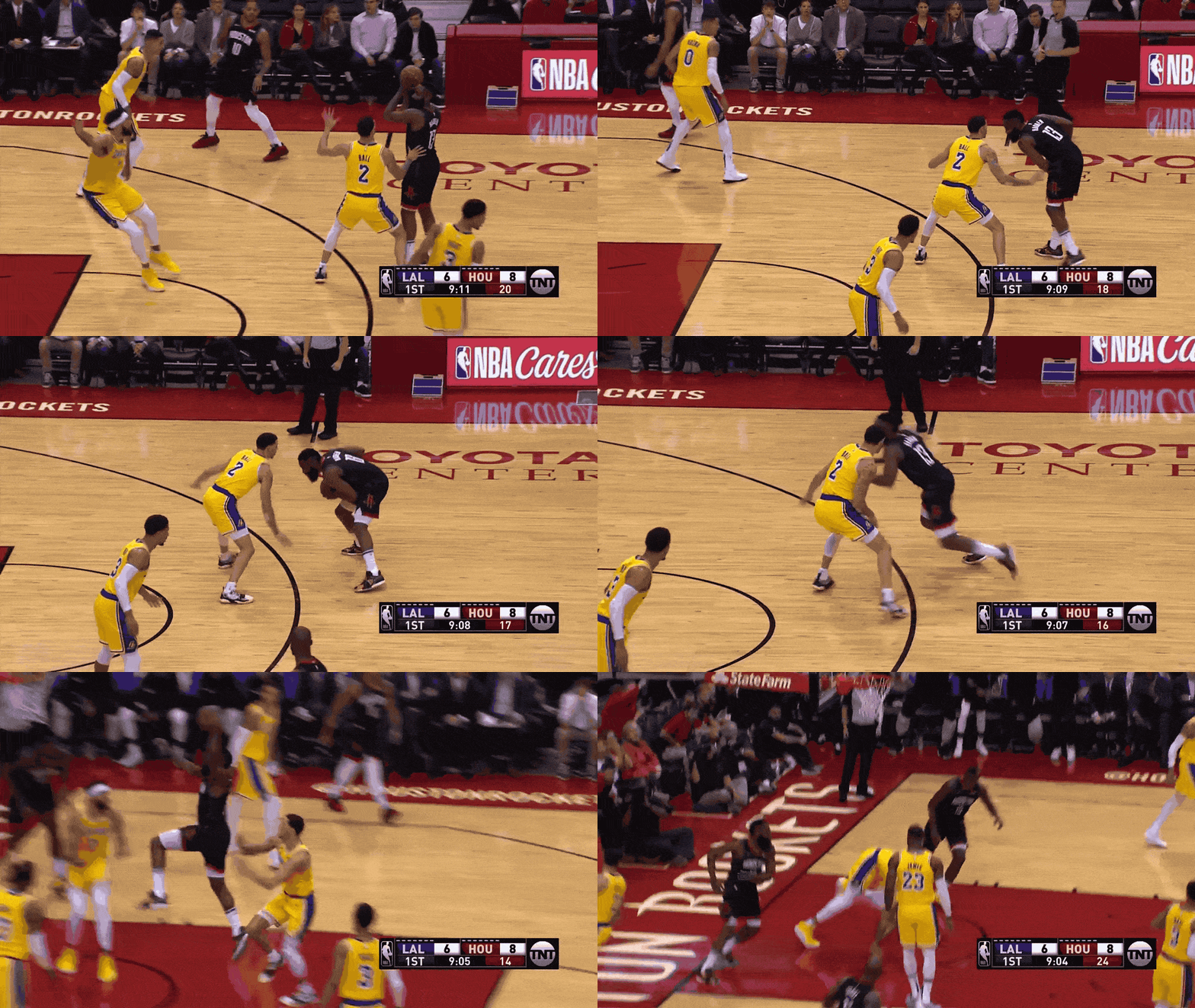
What makes this dynamic tragic is that the very thing that helped some people become extraordinary can also become the thing that limits them later.
The sensitivity that creates creativity can also create overload.
The hyperawareness that produces brilliance can also produce paralysis.
And the survival mechanisms that once protected someone can eventually disconnect them from themselves when the emotional stakes become too large.
That is why certain athletes, artists and creators can look unstoppable in ordinary environments but struggle once the pressure becomes existential.
Some nervous systems become more free under pressure.
Others become more defensive.
And sports may be one of the clearest places where we can watch that happen in real time.